
AI & Innovation Portfolio Connected mobility
Strategic Foresight
From connected car to connected ecosystem.
A 2030 vision for the in-car assistant of a global automotive manufacturer, and for the platform business it could become in Latin America.
- Role
- Direction of the visioning work
- Organization
- Capgemini · Applied Innovation Exchange
- Client
- Global automotive manufacturer, Latin America
- Horizon
- 2026–2030
01 The brief
What happens after the car is connected?
I directed strategic visioning work exploring the future relationship between mobility, data, connected vehicles, services and new business opportunities.
The anchor was the manufacturer’s in-car assistant, and a question with a long tail: if the assistant stops being a feature of the car and becomes the front end of a platform, what does the business look like at the end of the decade?
02 The platform
The car as one node, not the product.
The vision opens by redrawing the picture. Experience providers on one side, business partners on the other, industry and technology behind them, an AI orchestrator in the middle, and the customer rather than the vehicle at the center.
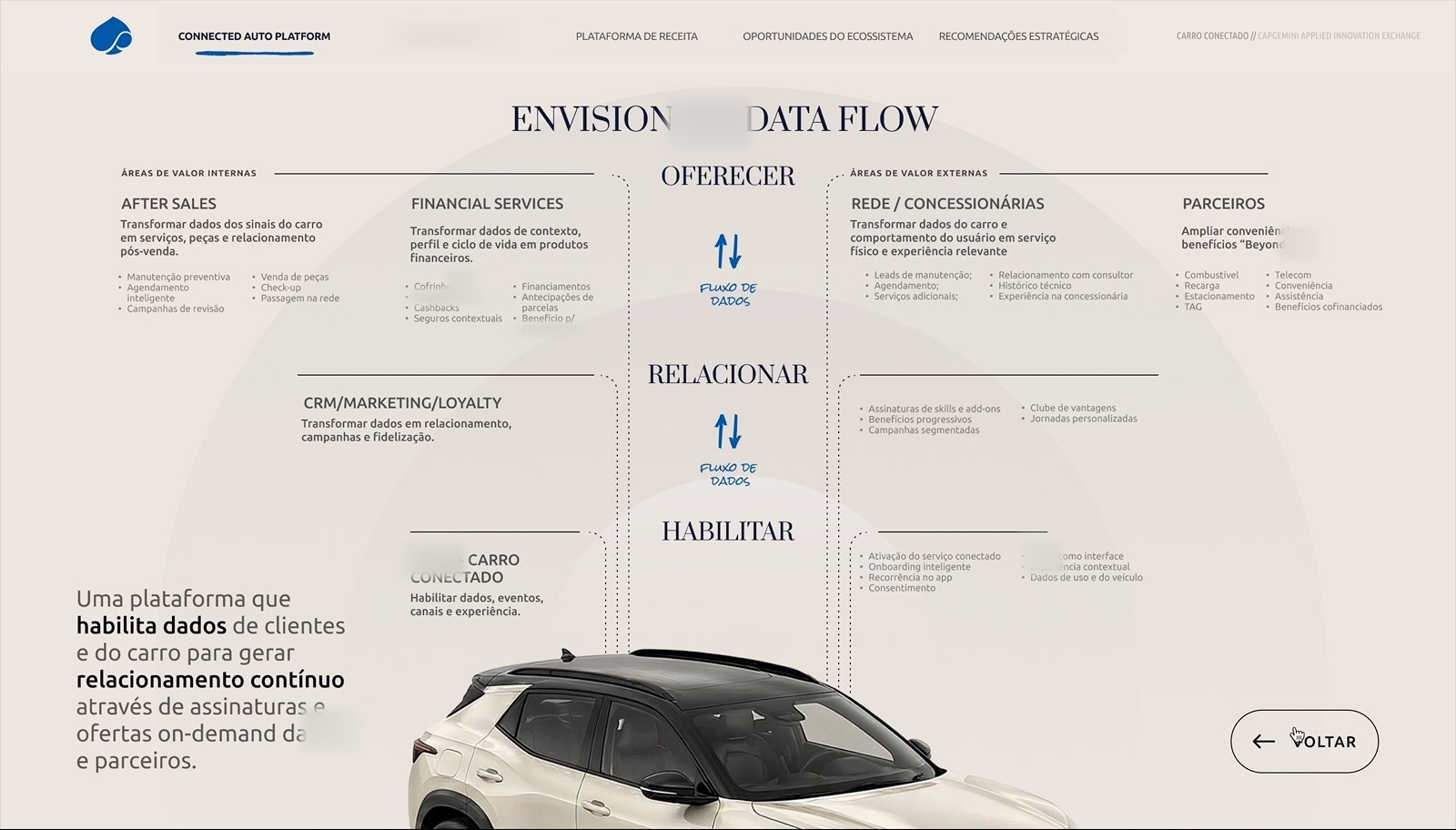
Redrawing the diagram is not a graphic exercise. It is what makes the next argument possible, which is that the assistant is a distribution channel for the whole ecosystem and should be funded like one.
03 The drivers
Principles before features.
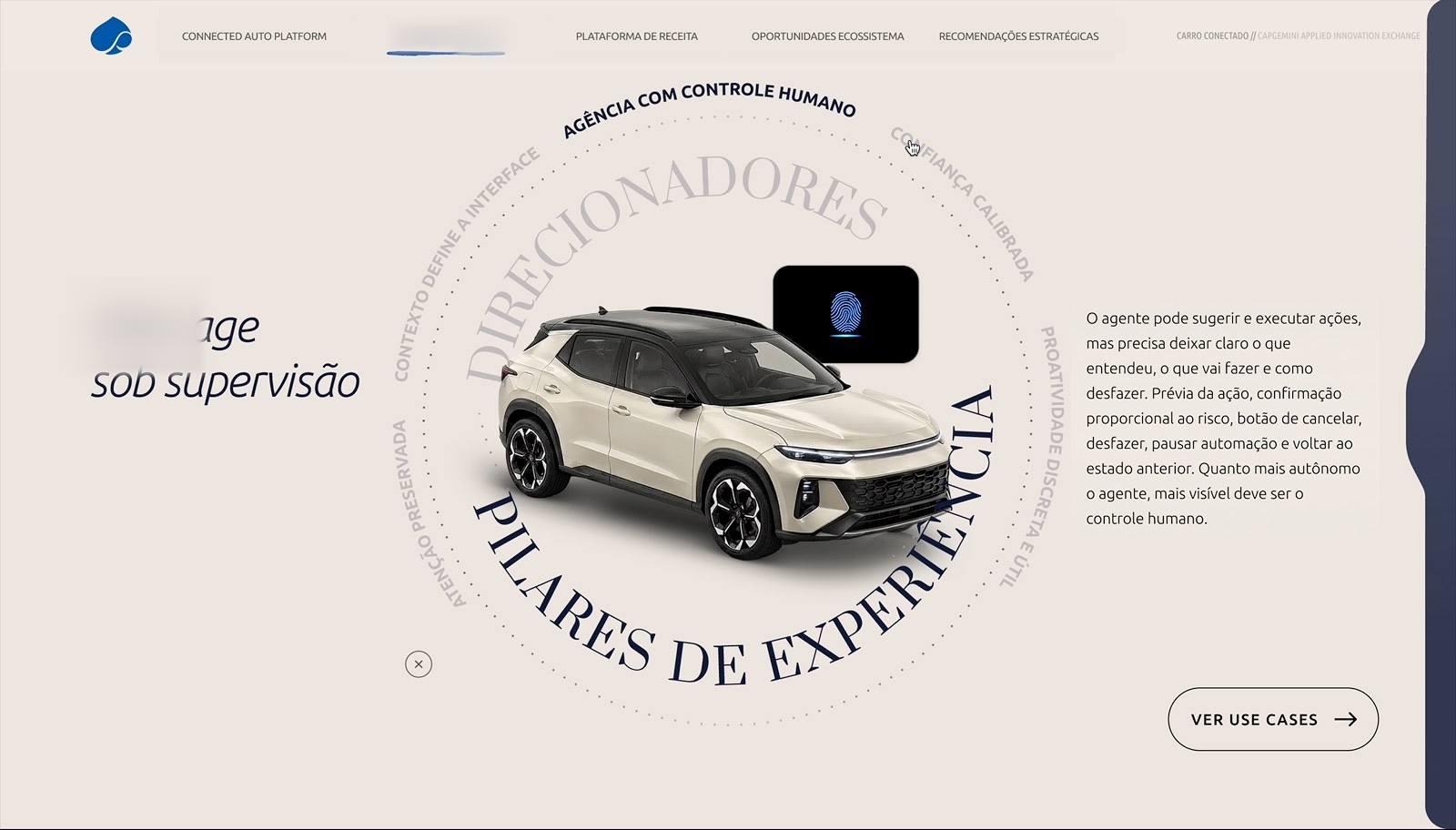
Before any use case, the vision fixes what the experience has to hold to. These are the constraints an assistant has to satisfy before it earns the word companion.
Named in the work: an assistant that behaves like a living environment rather than a screen; that recognizes who is speaking; that anticipates instead of waiting to be asked; that stays transparent and accountable; and that acts under human supervision. One of them is written as a warning to the design team itself, which is that the agent should not have a single UI.
04 The use cases
Where a vision becomes checkable.
A vision that stops at principles cannot be argued with. This one lands in concrete moments across the ownership lifecycle, each one specific enough to be costed, prototyped or rejected.
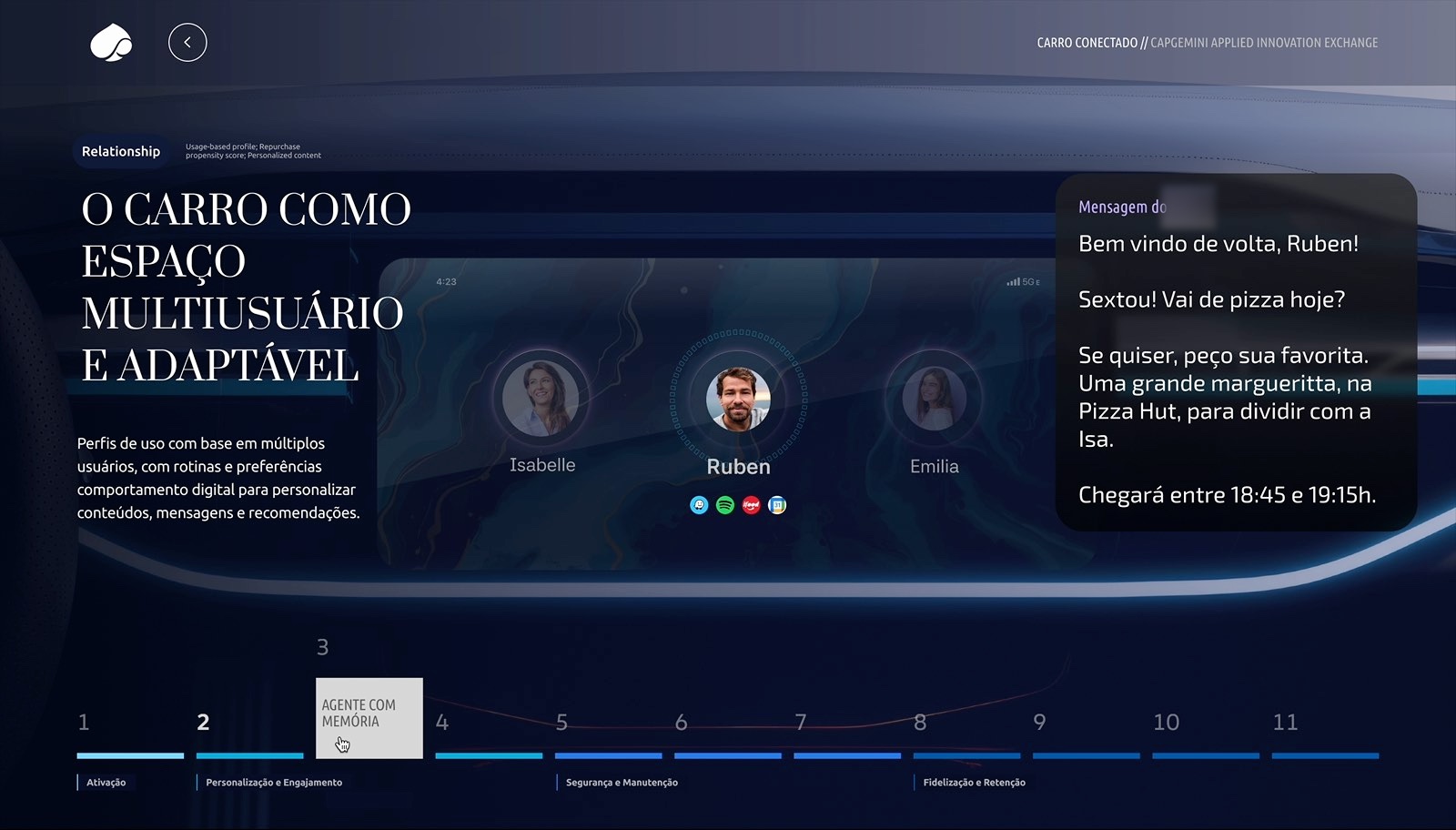
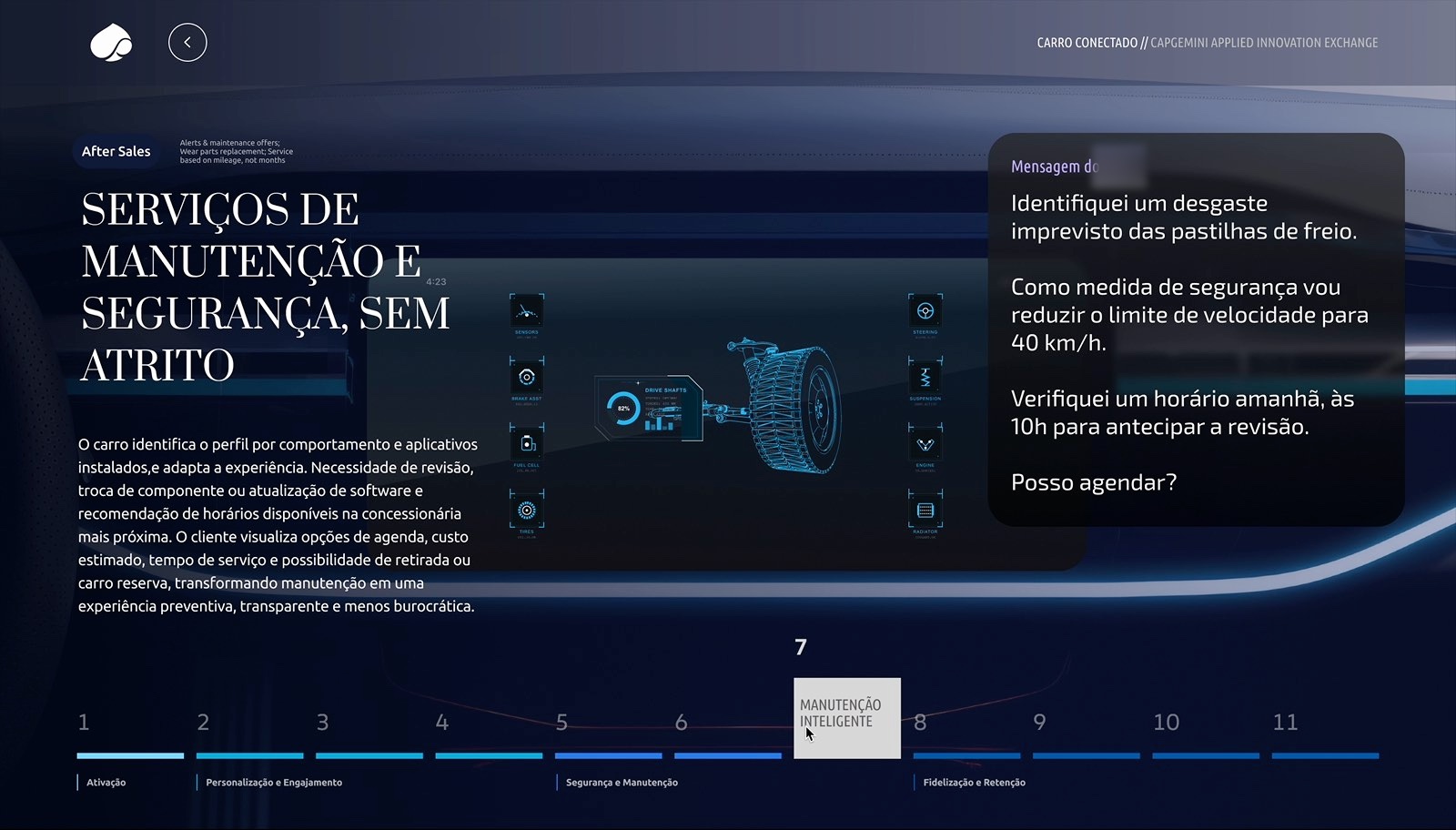
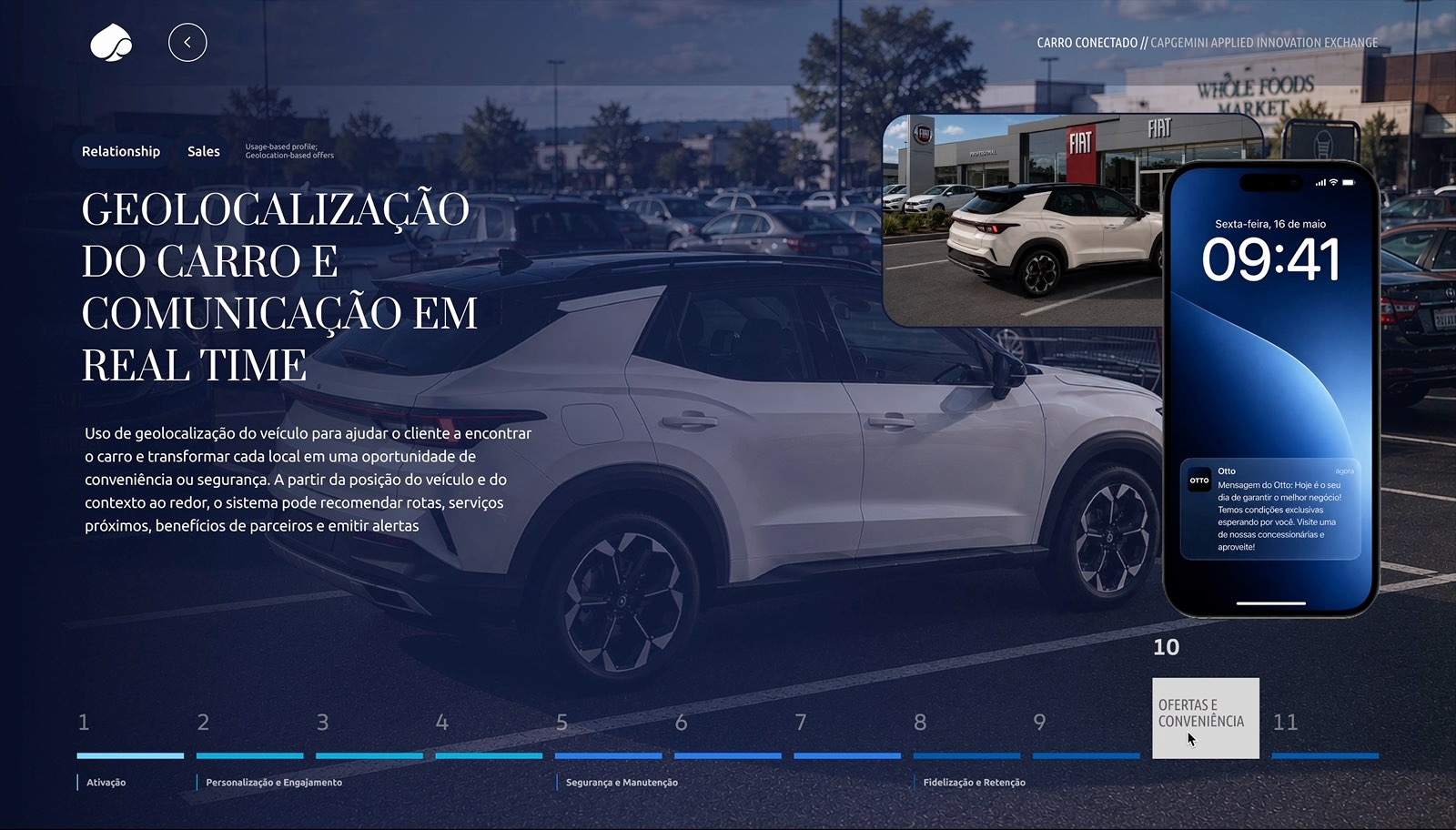
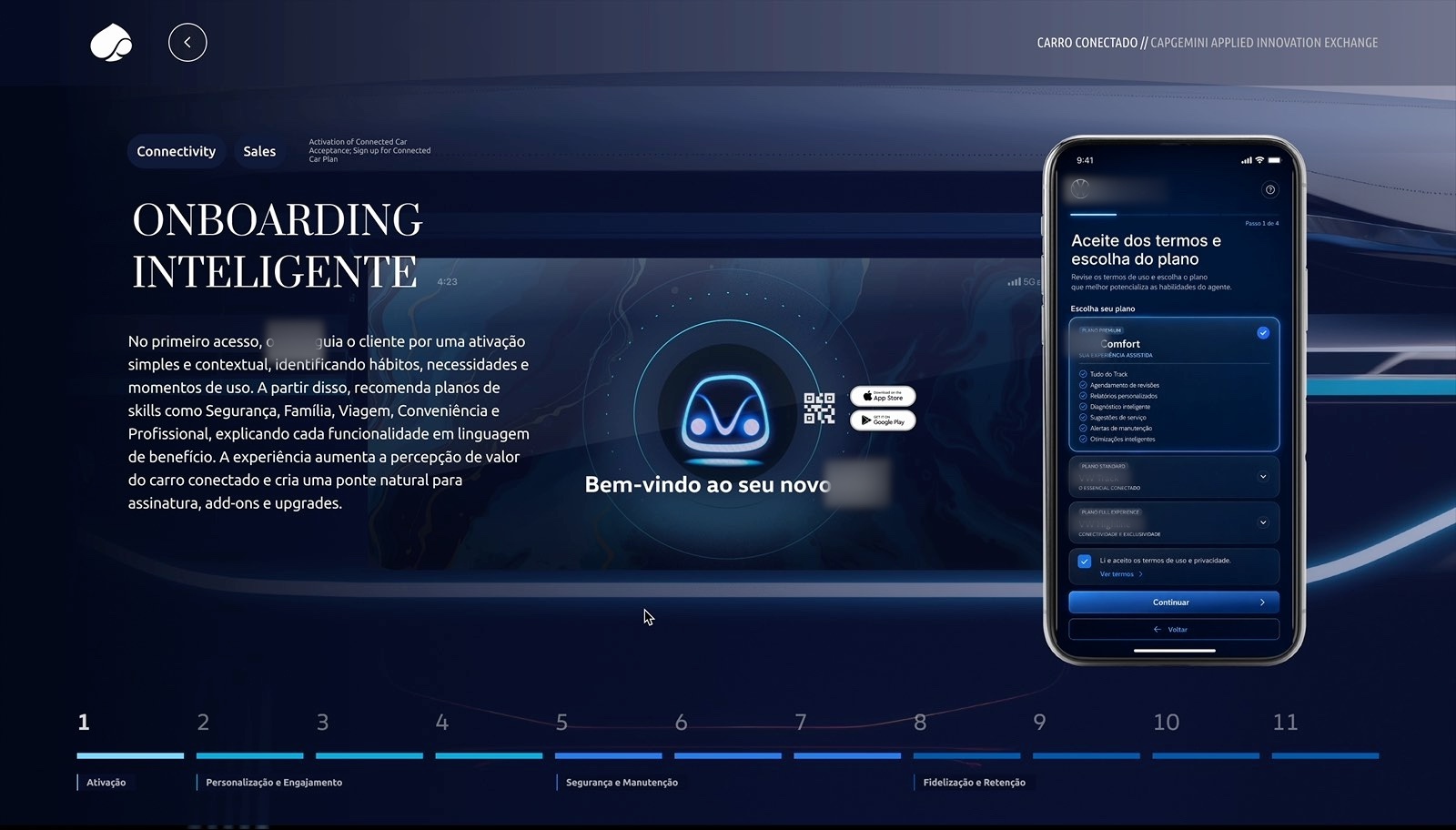
Proactive repair before leaving home. Contextual brand benefits at a partner fuel station. A proprietary loyalty and payments layer. Each is a small story, and together they describe a relationship that continues between drives rather than restarting at every ignition.
05 The business case
Opportunity before recommendation.
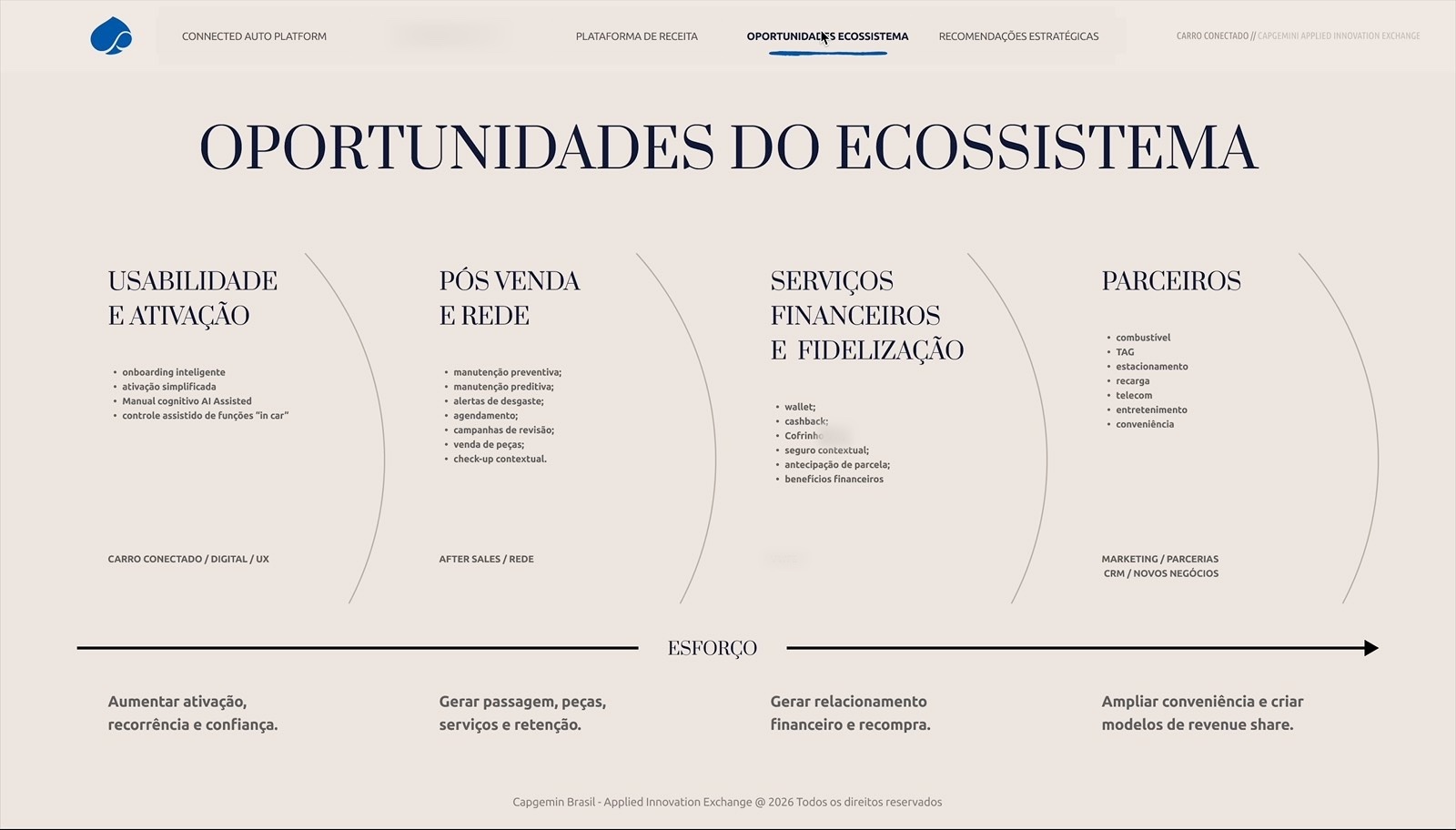
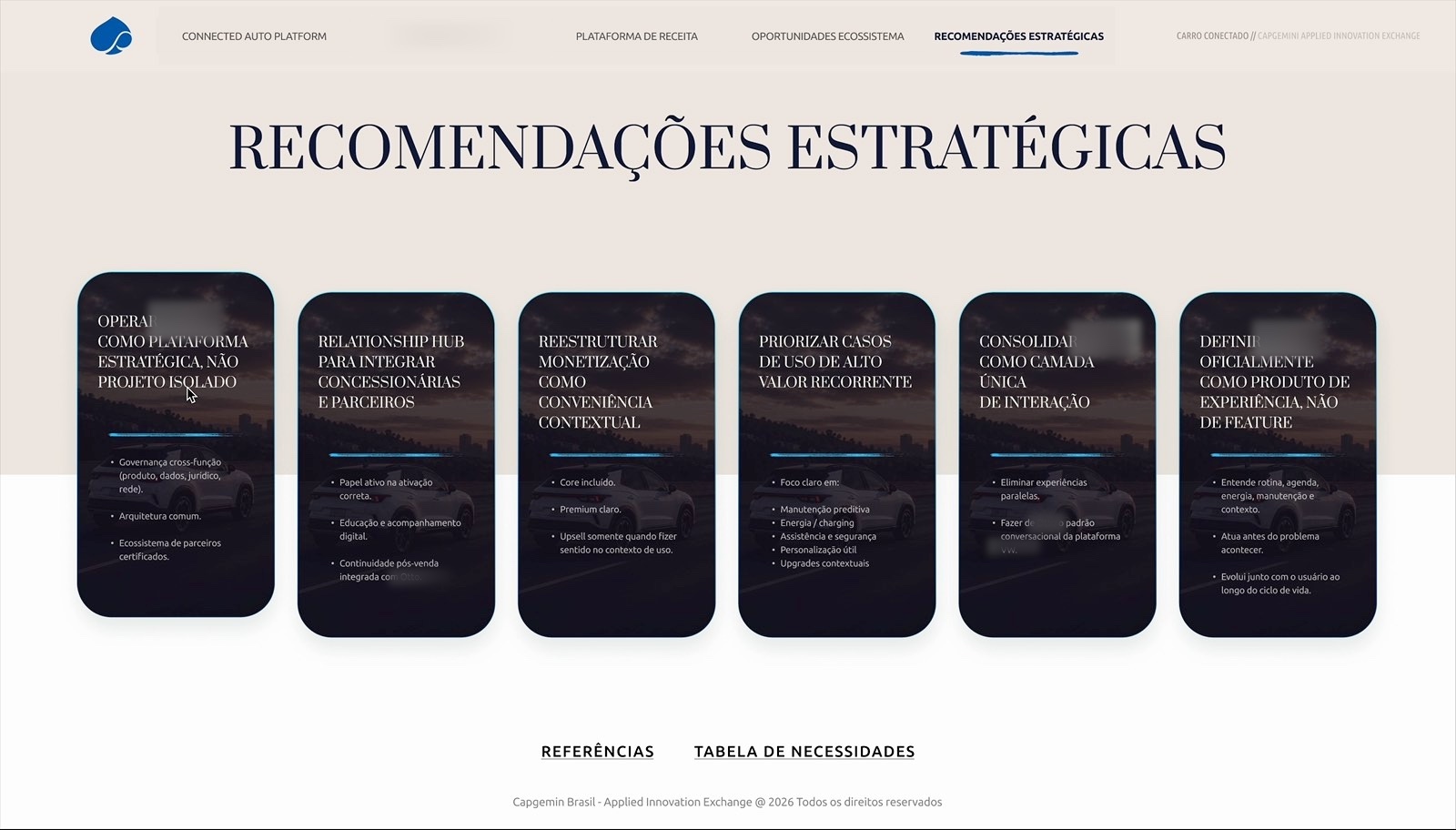
The vision closes where an executive audience needs it to. It closes on where the value sits, which is usability and activation, after-sales and the dealer network, financial services and loyalty, and partners. And it closes on recommendations sequenced across horizons rather than delivered as a list.
On what is shown here
The analysis behind this vision stays with the client. That includes the competitive benchmarks, the market data and the strategic recommendations themselves. What is published here is the shape of the deliverable and the experience thinking inside it.
06 The point
A vision earns its cost when it changes what the executive team decides to fund next.
Everything above exists to make that decision arguable: a picture of the platform, the principles it has to satisfy, the moments that prove it, and the places the money is.
07 How I ran it
I built a vision that could be checked.
Most visioning work fails by being impossible to disagree with. It is beautiful, everyone nods, and nobody can fund it. I structured this one so that each layer could be contested by the people who would have to pay for it.
-
I redrew the system diagram before proposing anything
Putting the customer at the center instead of the vehicle is not a graphic decision. It is what makes the next argument available, which is that the assistant is a distribution channel for a whole ecosystem and should be funded like one.
-
I fixed the experience principles before any feature
We named the constraints first. The assistant recognizes who is speaking, anticipates instead of waiting, stays accountable for what it did, and acts under human supervision. Naming them first meant the use cases that came later could be judged against something instead of admired.
-
I made every use case specific enough to be priced
Each moment in the vision can be prototyped, costed or rejected. A vision that stops at principles cannot be disagreed with, and anything that cannot be disagreed with cannot be approved either.
-
I closed on where the money is, in sequence
The recommendations arrive ordered rather than listed. An executive team does not need to know everything that is possible. It needs to know what to do first and what that choice closes off.
A vision pays for itself when it changes what the leadership team decides to fund next. Everything in the structure above exists to make that decision arguable rather than inspiring.